The 2027 NOx limit stays put
In late July 2026, the EPA put out a proposal that had a lot of fleet managers reaching for the fine print. The headline question on everyone’s mind was simple: did Washington just walk back the 2027 heavy-duty low-NOx rule? After reading the document, my answer is no, and the distinction matters if you buy parts or plan maintenance budgets.
The federal NOx standard for heavy-duty highway engines drops to 0.035 grams per brake-horsepower-hour for the 2027 model year. That number is unchanged in the new proposal. For context, the bar most of the on-road diesel fleet was built to is 0.20 g/bhp-hr, the limit that came in with the 2010 emissions tier. Moving from 0.20 to 0.035 is roughly an 82 percent cut, and it is the single biggest change to diesel NOx limits in well over a decade.
I think the confusion is understandable. When a regulator issues a proposal built around words like amendments and nonconformance penalties, it reads like a retreat. It is not. The emissions ceiling is still there.
What the proposal actually tweaks
The July 2026 document does two practical things. First, it lets engine manufacturers keep selling units that land between 0.035 and 0.200 g/bhp-hr by paying Nonconformance Penalties (NCPs) instead of hitting the limit cold. Second, it rolls back or delays some of the compliance and reporting machinery that came with the original 2022 rule.
The proposal is not final. EPA is taking public comments through August 29, 2026, which means the window is open right now. If you run a large fleet or sit in a trade group, this is the week to weigh in, not next month.
Why your existing trucks care
Here is the part that affects the 2010 to 2026 fleet most directly. Those trucks were engineered for a 0.20 g/bhp-hr world. They are not subject to the 2027 limit, and the new proposal does not change that. What it does change is the aftermarket environment around them.
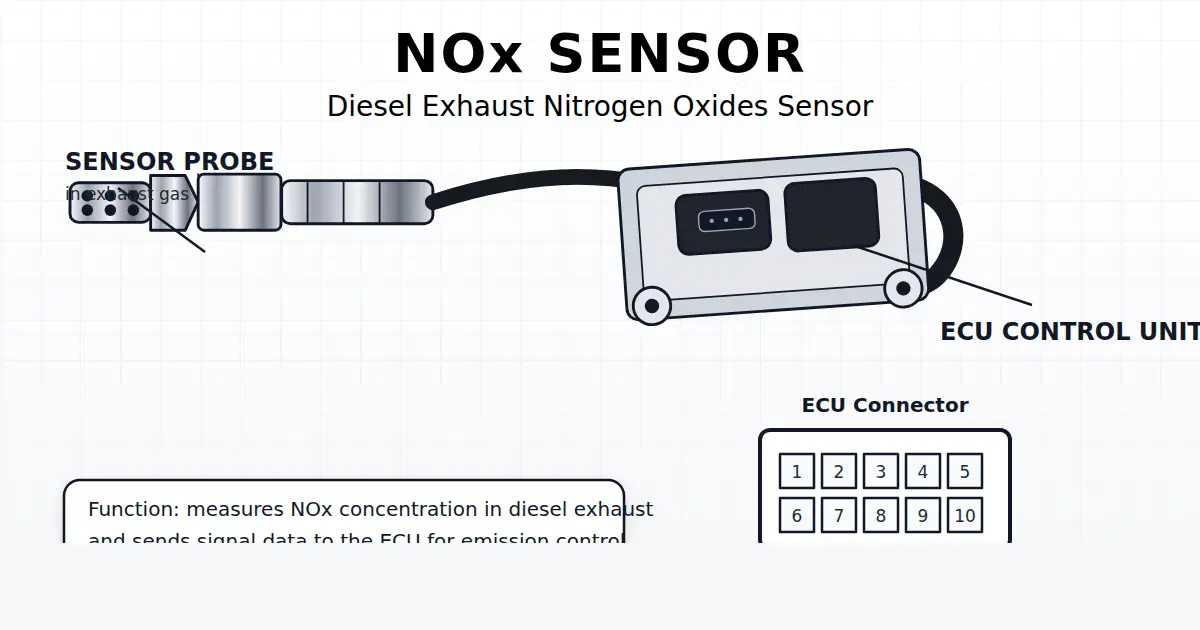
A tighter national ceiling pushes more engineering effort and more accurate sensing into the SCR system, including the NOx sensors mounted upstream and downstream of the catalyst. When the allowable margin shrinks, sensor drift that a 2010-era calibration could shrug off now trips a fault code faster. We see this in the shop notes our customers send us: a sensor that reads a few percent off is far more likely to light the dash on a newer calibration than on an older one.
For fleets, that means two things. You will replace NOx sensors a bit more often as tolerances tighten, and the quality of the replacement matters more than it used to. A cheap sensor with slow response or drift is no longer a minor nuisance. It is the difference between a clean regen cycle and a flagged emissions fault.
Specifying sensors that hold up
This is where sourcing decisions pay off. At SHR Autoparts we build NOx and DEF sensors under an IATF 16949 quality system, the automotive standard that governs how parts are designed, traced, and verified across the production line. We carry more than 900 sensor models that map to OE part numbers across European, American, and Asian truck platforms, so a buyer can usually match the original unit without hunting through three catalogs.
If you are qualifying a new supplier, ask for sample units before a bulk order. We ship samples against a part number, and our RFQ process for volume orders includes cross-checking the OE reference so you are not guessing. In my view, a supplier that cannot show the OE cross-reference or the quality certificate is not worth the price gap.
A 12-month planning note
For the next year, I would do four things. They are unglamorous, but they keep a fleet out of the shop during peak season.
- Check which of your engines fall under the 2027 tier and which stay in the 2010 tier.
- Stock a known-good NOx sensor for each chassis you run.
- Put a sample order in now rather than during the failure spike.
- Watch the August 29 comment deadline if the rule’s compliance details touch your operation.
Frequently asked questions
Does the July 2026 EPA proposal cancel the 2027 low-NOx standard?
No. The 0.035 g/bhp-hr limit for the 2027 model year remains in the proposal. EPA is adjusting how manufacturers reach compliance, not the emissions number itself.
Can engine makers still sell older, higher-NOx engines after 2027?
Under the proposal, yes, within limits. Units certified above 0.035 but below 0.200 g/bhp-hr can be sold by paying Nonconformance Penalties. This is a bridge, not a permanent pass, and the rule is not final yet.
Will my 2019 truck need a different NOx sensor because of this rule?
The truck itself is not re-certified by the proposal. What changes is the service environment: tighter nationwide tolerances make accurate, fast-responding sensors more important for avoiding fault codes during regen.
NOx Sensor Solutions
Continue from this guide to NOx sensor cross-reference, application support, and RFQ-ready product sourcing.
Need OEM cross-reference or wholesale pricing?
Send part numbers, applications, or sourcing requirements to SHR Autoparts for a faster B2B response.