
Why NOx sensors fail in the first place
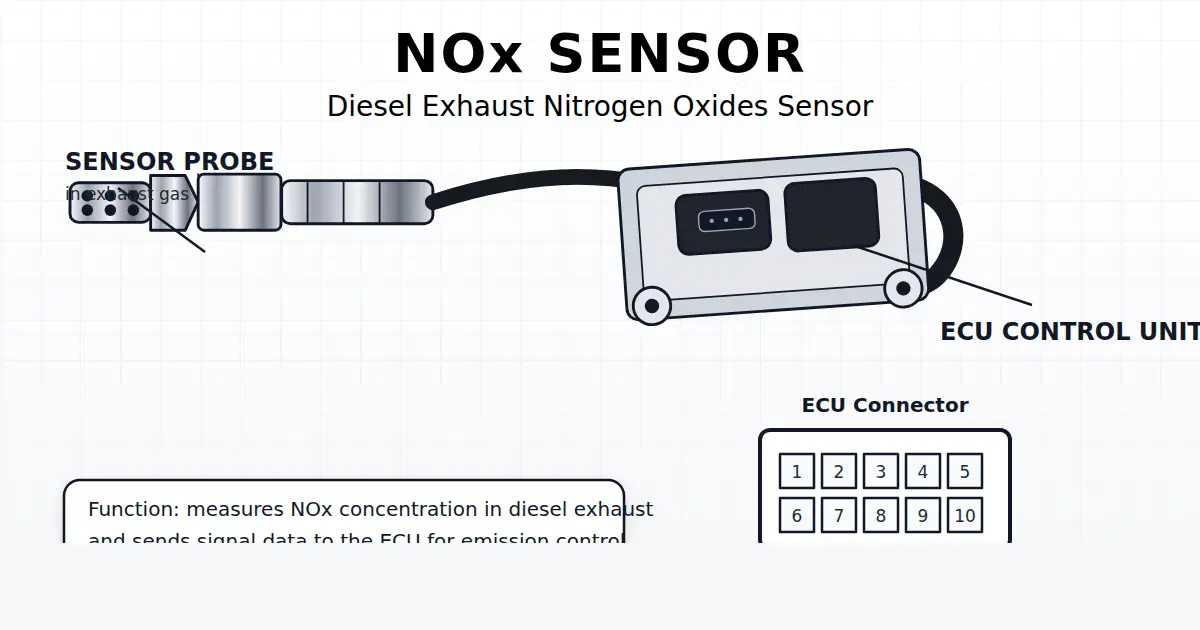
A NOx sensor sits in the exhaust stream and tells the engine control module how much nitrogen oxide is leaving the engine. On a modern diesel with selective catalytic reduction, that reading drives how much DEF the system injects and whether the truck stays within its emissions limit. When the sensor drifts or fails, the symptoms show up as a check engine light first, then a power derate if the fault is left alone. This article covers the failure modes we see most often in fleet workshops and the steps that actually confirm the part is bad.
Most NOx sensors use a two-chamber planar design. The first chamber strips oxygen, and the second measures NOx against a reference cell. That chemistry is sensitive to contamination. Silicone from careless use of RTV sealant, coolant traces from a leaking EGR cooler, and oil ash from extended drain intervals all coat the sensing element. Once the coating forms, the sensor reads low or swings wildly, and no amount of road time clears it.
Five failure modes worth knowing
- Silicone poisoning. White or grey powder at the connector and a sensor that reads near zero NOx is the classic sign. It happens when sensor-safe sealant is not used during intake or exhaust work. The damage is internal and permanent.
- Heat and physical damage. Sensors mounted low on the downpipe take hits from road debris and winter salt. A cracked housing lets moisture in and the heater circuit fails. You will see a heater or circuit fault code rather than a plausibility code.
- Exhaust leaks upstream of the sensor. A leaking flex pipe or loose clamp changes the gas composition the sensor sees. The readings look wrong even though the sensor is fine. Always smoke test the exhaust before condemning the part.
- Wiring and connector corrosion. On trucks that run winter road salt, the harness near the sensor rots. High resistance on the signal line produces intermittent faults that clear on a warm restart and return under load.
- Normal end of life. The internal pump cell degrades with heat cycling. Many sensors reach the end around 100,000 to 150,000 miles, and sooner on short-haul trucks that never reach full operating temperature.
The fault codes you will actually read
Generic NOx sensor circuit codes fall in the P2200 to P229F range. P2200 points to a circuit fault, P2201 to a range or performance problem on bank 1 sensor 1, and P229F covers a correlation fault between the two sensors. Manufacturers add their own codes on top, so a Volvo, a Cummins, and a Detroit will each show slightly different labels for the same underlying problem. In a closed-loop SCR system, a NOx sensor that reads low also pushes DEF dosing up, and you may get P20xx DEF codes alongside the P22xx ones.
A diagnosis that does not waste a sensor
Start with a scan tool that reads live data, not just pending codes. Compare the upstream and downstream NOx sensor values under load. A healthy system shows the downstream sensor reading a fraction of the upstream number once the catalyst is warm. If both read nearly the same, the SCR is not reducing, or one sensor is lying. Check exhaust leaks first, then harness resistance, then the heater circuit with a multimeter. Only order the part after the live data and the electrical checks point to the sensor itself.
Replacement and why OE matching matters
When you do replace it, use a part that matches the original equipment number. A sensor that fits the thread but carries the wrong calibration will still set a code after the ECU runs its self-test. The new unit usually needs a software initialization so the module learns the new sensor. Torque it to spec, keep fingerprints off the sensing tip, and run a short road test to confirm the derate clears.
At SHR Autoparts we stock OE-matched NOx sensors for Cummins, Detroit, Volvo, and most major platforms, with more than 900 part numbers covered under our IATF 16949 quality system. If you are unsure of the cross reference, send us the OE number and we will confirm the match. We take sample orders for a first fit check and provide bulk RFQ pricing for fleet maintenance programs.
Frequently asked questions
Can a NOx sensor be cleaned instead of replaced?
In most cases no. The contamination is inside the sensing chamber, not on the surface. Spray cleaners and bake cycles rarely restore accuracy and can damage the heater. Replacement is the reliable fix.
How long should a NOx sensor last?
Expect roughly 100,000 to 150,000 miles in normal duty. Short-haul and delivery trucks that run cold see shorter life. Contamination failures can happen far sooner regardless of mileage.
Will a bad NOx sensor put the truck into derate?
Yes. Most heavy duty ECUs trigger a torque derate after a set number of confirmed fault cycles, which is why a sensor that starts as a soft warning becomes a no-go truck if ignored.
NOx Sensor Solutions
Continue from this guide to NOx sensor cross-reference, application support, and RFQ-ready product sourcing.
Need OEM cross-reference or wholesale pricing?
Send part numbers, applications, or sourcing requirements to SHR Autoparts for a faster B2B response.