
Brass Copper
\n\n\n\nFuel Level Sensor
\n\n\n\nCopper level sensors can be used in various applications including fuel level sensors, BTMS (Battery Thermal Management System), and oil pan level detection. Copper is a versatile material that can be used in various sensing applications, including level sensing. Copper level sensors work by using the electrical conductivity of copper to detect changes in the fluid level.
\n\n\n\nIn fuel level sensing applications, copper level sensors can be used to detect the amount of fuel in a tank. As the level of fuel rises or falls, the electrical conductivity of the copper changes, which can be detected and used to determine the level of fuel.
\n\n\n\nIn BTMS applications, copper level sensors can be used to monitor the temperature and level of fluids in the battery pack. This information can be used to ensure that the battery pack is operating safely and efficiently.
\n\n\n\nIn oil pan level detection applications, copper level sensors can be used to detect the level of oil in an engine’s oil pan. This information can be used to ensure that the engine is properly lubricated and operating efficiently.
\n\n\n\nOverall, copper level sensors can be a reliable and cost-effective solution for various level sensing applications.
\n\n\n\nCustomized copper level sensors are available.
\n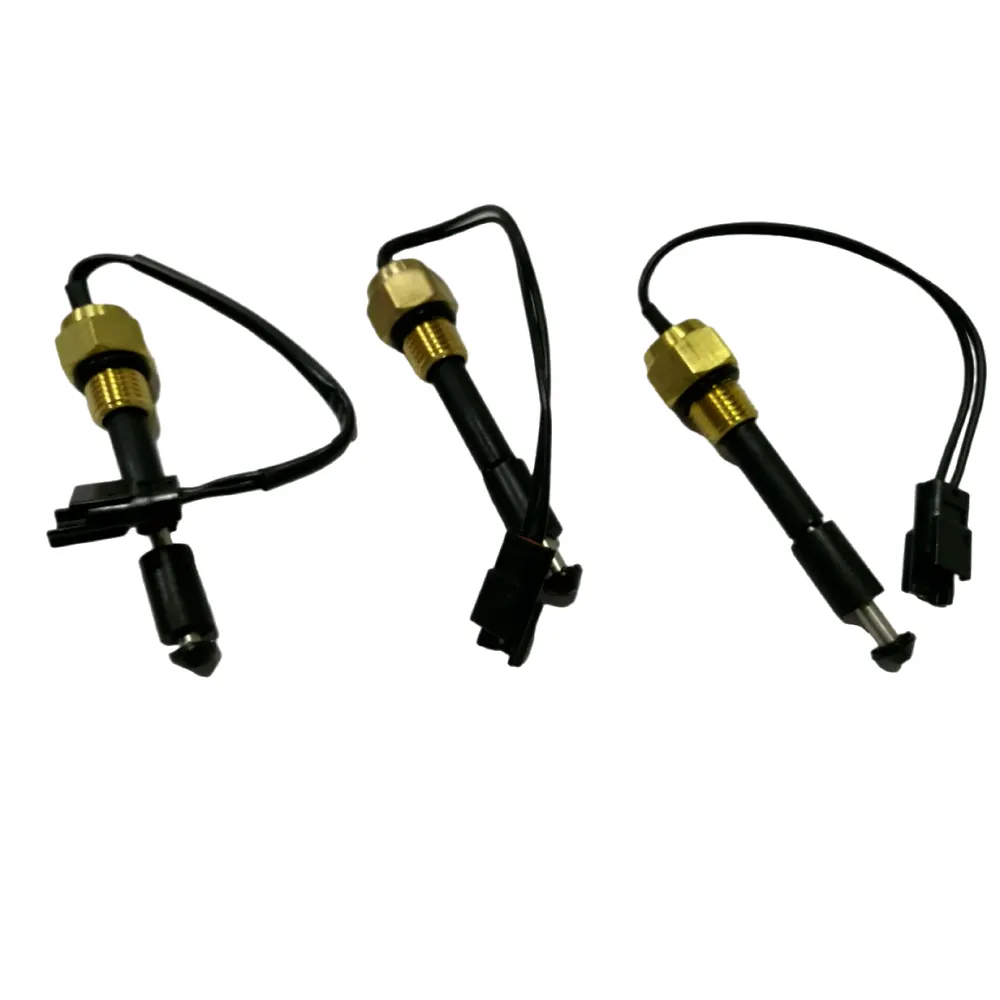
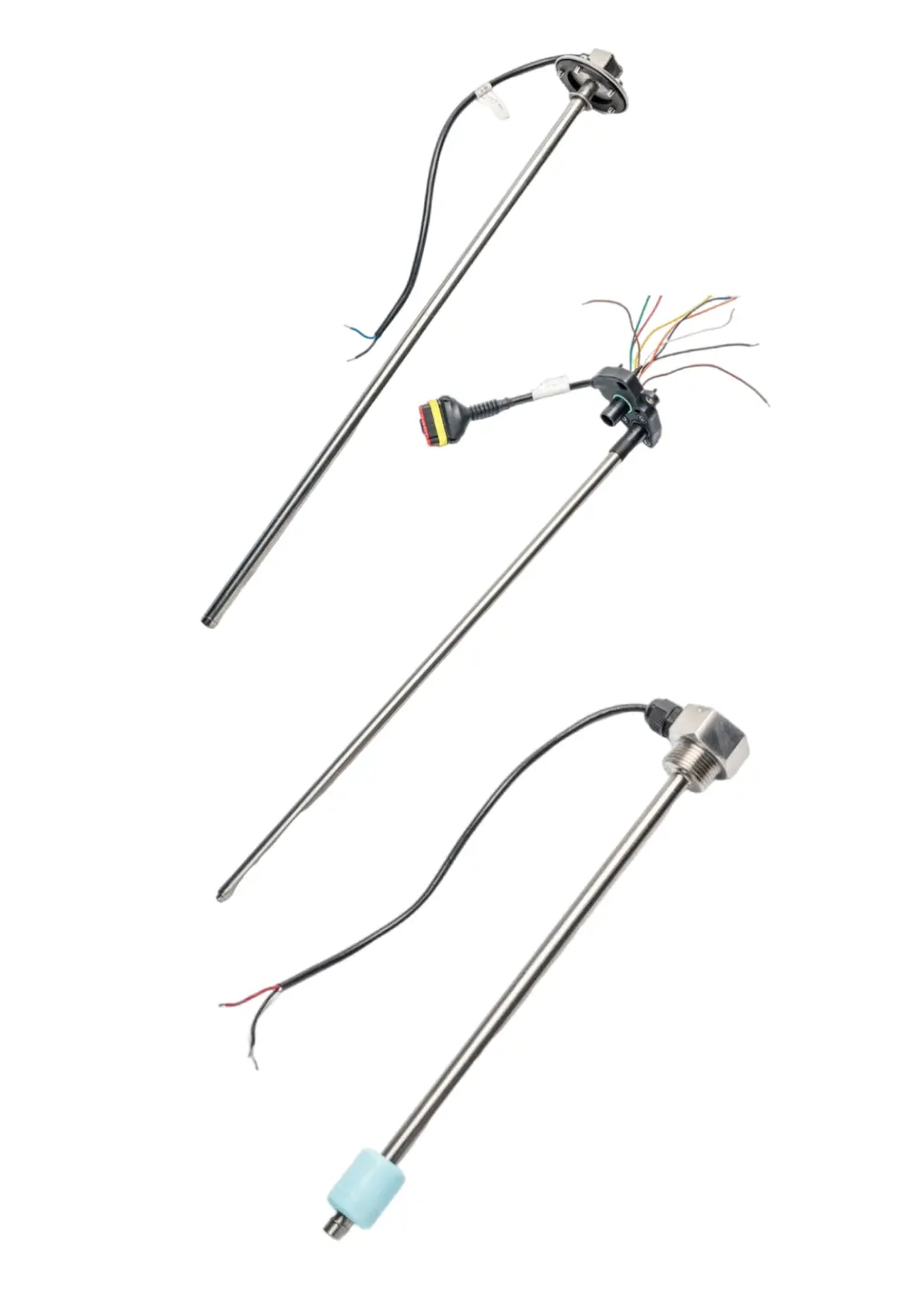
Stainless Steel SUS304 SUS316
\n\n\n\nFuel Level Sensor
\n\n\n\nWhile stainless steel fuel level sensors can be used in diesel, gasoline, and AdBlue tanks, the output type, sensing technology, and applications can vary.
\n\n\n\nOutput types for stainless steel fuel level sensors can include resistance, current, and voltage, depending on the specific sensor and its intended use. These sensors can be used in a variety of vehicles and machinery, including generators, trucks, buses, and construction equipment.
\n\n\n\nWhile some stainless steel fuel level sensors may use reed switches as a sensing technology, other options include ultrasonic, capacitive, and resistive sensing technologies. The choice of sensing technology may depend on factors such as the type of fluid being measured, the tank size, and the accuracy required.
\n\n\n\nIn general, stainless steel fuel level sensors are designed to be durable and long-lasting, with resistance to corrosion and exposure to harsh chemicals. They can provide accurate and reliable measurements of fluid levels in tanks, allowing operators to monitor and manage fuel usage.
\n\n\n\nOverall, stainless steel fuel level sensors are a versatile and important component in many vehicles and machinery, and can play a critical role in optimizing performance and minimizing downtime.
\n\n\n\nCustomized stainless steel sensors are available.
\n
Ready to Order?
\nBrowse our 900+ NOx sensor models or request a custom quote today.
\n\nTechnical Diagram and Sourcing Notes
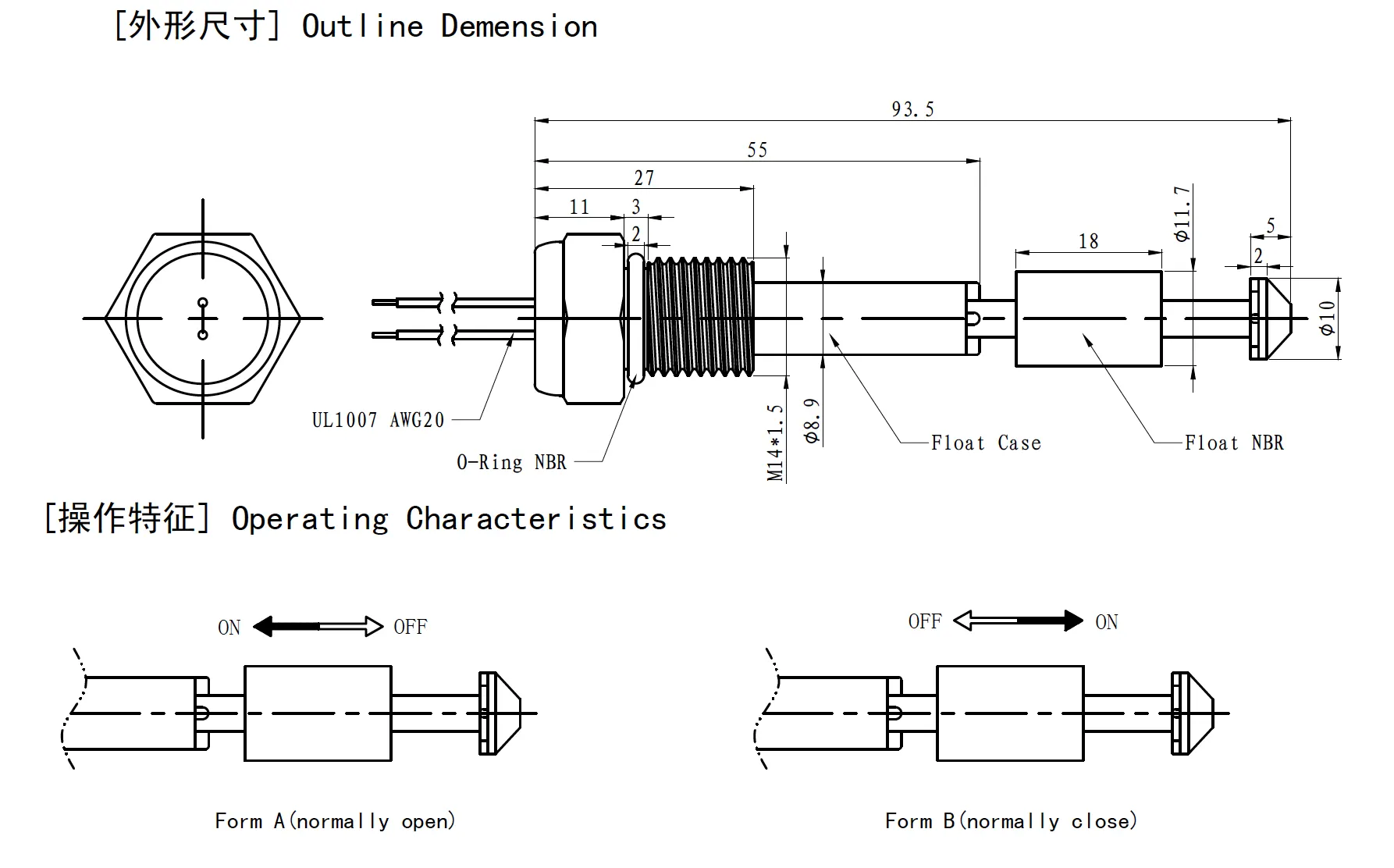
\nThis diagram shows the main fuel level sender components to verify when replacing automotive fuel level sensors.
\n
Technical guide and buying support
Learn how fuel level sensors work, what failure symptoms to check, and what information helps confirm replacements.