Why Euro 7 changes the sensor game
Euro 7 was adopted by the EU in 2024 and starts phasing in during 2026. The headline limits barely moved from Euro 6, but two changes matter a lot for anyone buying or selling NOx sensors. First, compliance now follows the vehicle for a much longer stretch of its life. Second, vans, hybrids, and range-extender commercial vehicles are pulled into emissions monitoring that previously skipped them.
For fleets and distributors, the practical takeaway is simple: a NOx sensor is no longer just a part you replace when it breaks. It is now a compliance component.
What actually changed in the limits
Euro 6 already capped diesel passenger cars at roughly 80 mg/km of NOx. Euro 7 keeps that number. What it adds:
- In-use checks now run over a longer lifespan, so sensor drift and heater-circuit wear become a real problem long before the vehicle is scrapped.
- Light commercial and hybrid vehicles carry emission hardware that was optional before, which means more sensor fitments per vehicle.
The sensor wears out, and now that matters
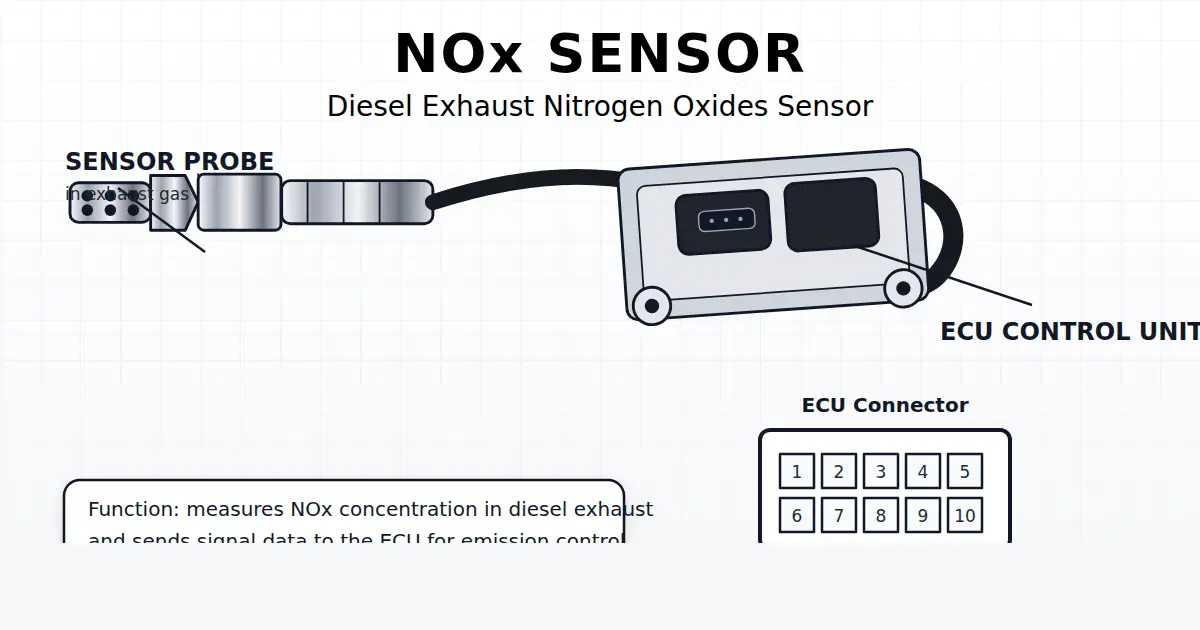
A NOx sensor is a heated electrochemical cell. The platinum and yttria-stabilized zirconia element degrades every time it cycles through hot and cold, and the heater resistor wears with every cold start. Under Euro 6, a sensor could drift out of tolerance late in a vehicle’s life and nobody noticed. Under Euro 7’s longer monitoring window, that drift shows up while the vehicle is still on the road. So replacements shift from “fix it when it dies” to “schedule it before it fails.”
I think that is the part most buyers miss. The demand does not spike on failure anymore. It spreads out into steady replenishment, which is a different purchasing pattern entirely.
What to look for when sourcing
Three things decide total cost of ownership on replacement sensors:
- Cross-sensitivity control. A good sensor resists false readings from ammonia (NH3) slip in the SCR system. A bad one throws fault codes you will chase for hours.
- Heater-circuit build quality. The heating element is the number one field failure, not the cell itself.
- OEM cross-reference coverage. With 900-plus models in play, from Cummins and DAF to MAN, Scania, Mercedes-Benz, and Volvo, the breadth of application coverage decides whether one SKU can serve a mixed fleet.
How SHR handles Euro 7
SHR Autoparts builds NOx and DEF/urea level sensors under IATF16949 controls. Calibration matches OE specs, and every unit is tested for gas sensitivity, temperature stability, and vibration resistance before it ships. The catalog covers more than 900 models, and we cross-reference by OEM number on request.
Frequently asked questions
Does Euro 7 apply to existing Euro 6 vehicles?
Not retroactively. But as Euro 6 fleets age under stricter monitoring, replacement demand for NOx sensors climbs.
Can I use a universal NOx sensor?
Only if it is calibrated and pinned for the specific ECU. A mismatched sensor triggers persistent fault codes.
How do I confirm the right part number?
Cross-reference by OEM number. Our team validates applications when you send the number.
NOx Sensor Solutions
Continue from this guide to NOx sensor cross-reference, application support, and RFQ-ready product sourcing.
Need OEM cross-reference or wholesale pricing?
Send part numbers, applications, or sourcing requirements to SHR Autoparts for a faster B2B response.